Picture this: you rush home hungry, open your pantry, and—bam—you’re staring into a chaotic cave of half-empty boxes and random cans. What’s for dinner? Who knows. Suddenly, takeout’s looking easier than ever.
It’s not just about clutter. A disorganized pantry makes it tough to cook healthy, wastes money on duplicates, and leaves you frustrated when you can’t find what you need. Plus, the stress adds up when dinner time becomes a scavenger hunt.
By the time you finish reading this pantry organization guide stocking tips, you’ll know exactly how to turn your pantry into a reliable kitchen HQ for quick, healthy meals. Ready to open that door and actually smile? Here’s how to get started.
Why Pantry Organization Makes Healthy Cooking Easier
Food decisions get overwhelming fast when your pantry is a jumble — and that’s not just about stress. There’s real science behind why cluttered shelves nudge you toward less healthy meals. According to the Academy of Nutrition and Dietetics, visual order makes it easier for your brain to spot nutritious ingredients and skip the impulse snacks. Sounds simple, but the results are dramatic when you see it in action.
Why does it matter so much? The truth is: when meal prep takes longer because you can’t find lentils or olive oil, you’re way more likely to grab convenience food. Lost time equals missed opportunities for balanced eating, which costs money and health in the long run.
💡 Pro Tip: Grouping pantry staples by category (like grains, canned beans, or healthy oils) not only speeds up weeknight cooking but also helps you instantly spot what’s running low — that’s exactly what registered dietitians recommend for better meal planning.
Picture this scenario: you come home late, tired, and hungry. Instead of digging through crowded shelves hunting for quinoa, you immediately spot your healthy grains because each type has its own jar on a labeled shelf. Suddenly, a wholesome dinner takes 20 minutes — not 60. That’s efficiency you can taste.
| Unorganized Pantry | Organized Pantry | Impact on Cooking |
|---|---|---|
| Crammed, random placement | Groups by category & label | Reduces search time, lowers stress |
| Duplicate expired items | First-in/first-out system | Less waste, fresher meals |
| Impulse snacks up front | Healthier staples front and center | Makes nutritious choices automatic |
And honestly? The small routine of keeping pantry shelves neat is where those everyday healthy habits start. National Institutes of Health guidelines show spaces arranged for their function (like a kitchen) encourage better choices — without needing extra willpower.
But there’s one detail most owners completely overlook until it’s too late…
Essential Staples To Always Have On Hand
Ever wonder why some people whip up healthy meals in minutes—while others get stuck staring into the pantry, paralyzed? The difference often comes down to what’s actually on the shelves. Stocking the right essentials isn’t about filling every nook, but about having a reliable foundation for fast, varied, nourishing cooking any day of the week.
The key? Choose versatile, nutrient-dense staples that give you maximum flexibility. Here’s a list of pantry all-stars registered by the American Heart Association as vital for balanced home meals:
- Whole Grains: Brown rice, quinoa, rolled oats, whole-wheat pasta. Great sources of fiber and quick energy.
- Legumes: Canned black beans, chickpeas, and lentils—packed with plant-based protein and iron.
- Healthy Oils: Extra-virgin olive oil (for salad dressings and sautéing) and avocado oil (for high-heat cooking).
- Spices & Dried Herbs: Keep basics like cumin, smoked paprika, oregano, black pepper, and cinnamon within reach for big flavor with no extra calories.
- Nuts & Seeds: Almonds, walnuts, chia seeds, and sunflower seeds are shelf-stable and perfect for snacking or meal-boosting crunch.
- Canned Tomatoes & Purees: For fast stews, soups, and sauces—cans save weeknights again and again.
- Broths & Stocks: Low-sodium chicken, beef, or vegetable, a foundation for everything from risotto to soup.
- Dried Fruit: Raisins and dates are naturally sweet and shelf-stable—use sparingly for energy bites or bowl toppers.
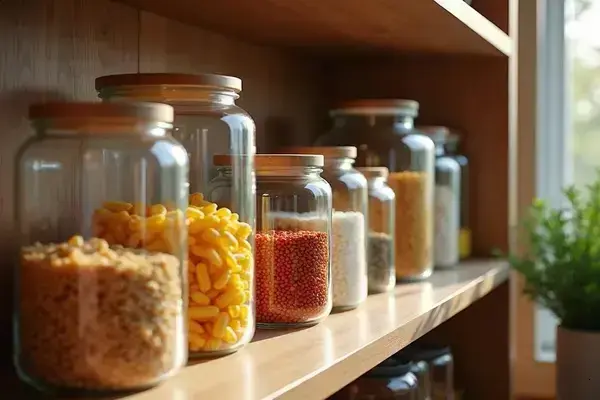
💡 Pro Tip: Store your most-used staples in airtight glass jars. You’ll see what’s running low at a glance—and grains and flours stay fresher, longer. The USDA suggests labeling jars with purchase dates to maintain freshness and reduce food waste.
In practice: imagine a rushed Tuesday night. Your fridge is bare, but your pantry lineup includes canned chickpeas, garlic, olive oil, and canned diced tomatoes. Ten minutes later, there’s a Mediterranean-inspired stew simmering—zero stress, no takeout. That’s the power of strategic stocking.
| Staple | Why Keep It? | How to Use |
|---|---|---|
| Quinoa | Protein-rich, cooks fast | Salads, bowls, one-pot meals |
| Canned Beans | Budget source of protein & fiber | Soups, salads, veggie burgers |
| Extra-Virgin Olive Oil | Heart-healthy fat | Dressings, sauté, roasting |
What actually works might surprise you…
Smart Storage Solutions For Every Pantry Size
Facing a cramped cupboard or a walk-in space that somehow always feels messy? The truth is, smart storage solutions can transform any pantry—tiny or sprawling—into a functional, stress-free zone for prepping healthy meals. No two kitchens are the same, but there’s a smart fix for nearly every challenge.
Game-Changing Storage Tools
- Clear Glass or Acrylic Containers: Let you spot supplies instantly without opening every lid—ideal for flours, grains, and snacks.
- Lazy Susans: These rotating trays make oils, vinegars, and condiments accessible in deep corners.
- Stackable Bins: Maximize vertical space, especially in shallow cabinets or on wire shelving.
- Pull-Out Drawers: Perfect for storing canned goods and bottles—no more digging in the back.
- Over-the-Door Racks: Give small pantries extra real estate for spices and packets, right at eye level.
💡 Pro Tip: Don’t forget to label every container, especially for bulk items bought at warehouse clubs or specialty grocers. The CDC also notes that airtight containers are best for protecting dry goods from pests and moisture—both of which can spoil your healthy intentions fast.
Picture this scenario: your galley kitchen “pantry” is just one tall cabinet, and you’re constantly playing Tetris with rice, crackers, and sauce jars. After switching to stackable bins, using a lazy Susan for bottles, and labeling everything, meal prep goes from frustrating to effortless—no more mystery bags crammed in the back!
| Solution | Ideal For | Common Mistake |
|---|---|---|
| Stackable Bins | Tiny shelves | Not labeling contents |
| Lazy Susan | Deep shelves/corners | Overloading with tall bottles |
| Pull-Out Drawers | Large walk-ins | Ignoring upper shelf space |
And this is exactly where most people make the most common mistake…
How To Rotate, Restock, And Prevent Waste
Ever buy a fresh bag of flour, only to discover two barely-touched bags lurking at the back later? Pantry waste hurts your wallet and your meal planning confidence—but it’s shockingly easy to fix with just a little system and know-how. Here’s the thing: professional kitchens (and organizations like the Environmental Protection Agency) all use the same core techniques to make food last, stocks stay rotated, and waste drop fast.
- Take Everything Out: Clear your shelves completely. Wipe them down. You’ll spot forgotten items and expired goods right away. Time: 10–20 minutes.
- Sort by Expiry: Group foods by category (e.g., grains, cans, snacks) and then arrange them by “best by” date. Oldest goes in front.
- Label & Date: Use sticky labels or dry-erase markers to note open dates. For bulk bins, include purchase or expiration dates on the container.
- Restock Smart: Add new groceries behind older stock. This ‘first-in, first-out’ method (FIFO) is standard in restaurant pantries and helps prevent surprise waste.
- Set a Review Schedule: Once a month, do a mini-check. Toss obvious expired items and make a quick shopping list for true gaps, not duplicates.
- Sticky labels or dry-erase markers
- Bins or baskets for sorting
- Clean cloth for wiping shelves
- Reusable containers with airtight lids
⚠️ Important Warning: Don’t combine new and old ingredients in the same jar. For food safety, always finish existing stock first—especially for products sensitive to moisture or insects.
In practice: say you’re restocking brown rice. You spot an older, half-full jar and a fresh bag. Transfer the older rice to the top of your usage bin, pour the new beneath, and jot the new purchase date on a label. It takes less than a minute—and sidesteps waste before it happens.
| Mistake | Result | Fix |
|---|---|---|
| Newer items shelved in front | Older food spoils, forgotten | FIFO: oldest in front, new in back |
| No date labeling on containers | Stale or expired ingredients | Simple sticker with open/purchase date |
| Mixing batches | Cross-contamination or quality loss | Finish one batch before opening more |
But what if you’re missing a key ingredient or realize you’re almost out—right when you want to cook?
Quick Fixes When You’re Short On Ingredients
What’s your move when a key ingredient is missing—and delivery isn’t coming to the rescue? Here’s the truth: most home cooks run into this dilemma, but a few quick swaps and clever pantry strategies can save your dinner without a last-minute grocery run. According to the Academy of Nutrition and Dietetics, embracing ingredient adaptability is a cornerstone of healthy, resilient home cooking.
5 Quick-Fix Swaps for Missing Pantry Staples
- No Breadcrumbs? Crush whole-grain crackers, oats, or even leftover toast for breading or binding.
- Out of Canned Beans? Sub cooked lentils or frozen edamame for fiber and protein—they’re surprisingly interchangeable in salads and soups.
- Ran Out of Broth? Mix water with a dash of soy sauce, olive oil, and dried herbs for instant depth.
- No Eggs? Try a “flax egg”: 1 tbsp ground flaxseed + 2.5 tbsp water, let rest 5 min—works for most baking or veggie patties.
- Missing Tomato Sauce? Thin tomato paste with water and add a sprinkle of sugar and seasonings for a fast, flavorful fix.
💡 Pro Tip: Keep a running list of your “go-to” swaps on the inside of your pantry door. It’ll save you stress in the heat of the moment (and can inspire new recipes when you least expect it).
Picture this scenario: you’re halfway through a one-pot chili, only to realize the cumin disappeared. A quick check of your spice shelf turns up smoked paprika and coriander. You throw them in—and it’s delicious, just different. That’s pantry confidence.
| Ingredient | Easy Sub | Best Use |
|---|---|---|
| Milk | Oat or almond beverage | Baking, creamy sauces |
| Pasta | Rice or spiralized veggies | Hot dishes, casseroles |
| Fresh garlic | Garlic powder or shallot | Soups, dressings |
Once this is in place, the rest of the routine falls into place naturally.
Your Pantry Is Ready for Anything
If you take just one thing from this pantry organization guide stocking tips, let it be: a well-planned pantry makes healthy cooking easy, fast, and stress-free. It’s not about perfection—it’s about creating smart systems, stocking versatile basics, and knowing exactly where everything is.
Think back to those frustrating meal preps—messy shelves, missing ingredients, wasted food. Now? You’ve got the confidence to keep things fresh, improvise with quick swaps, and actually enjoy the process. Step by step, your pantry can become your best cooking ally.
Which storage solution or go-to ingredient are you excited to try first? Share your ideas or pantry success stories in the comments. Let’s keep each other inspired to cook smarter, not harder!

Lauren Marie Collins is a meal planning enthusiast and nutrition writer dedicated to helping everyday people eat healthier, spend less, and actually enjoy the food they prepare. With a passion for practical meal prep systems and honest nutrition guidance, Lauren built this blog to make healthy eating feel simple, sustainable, and genuinely accessible for everyone.